Type 122 · 2+2 or two-seat coupé
Lotus Evora
2009–2021
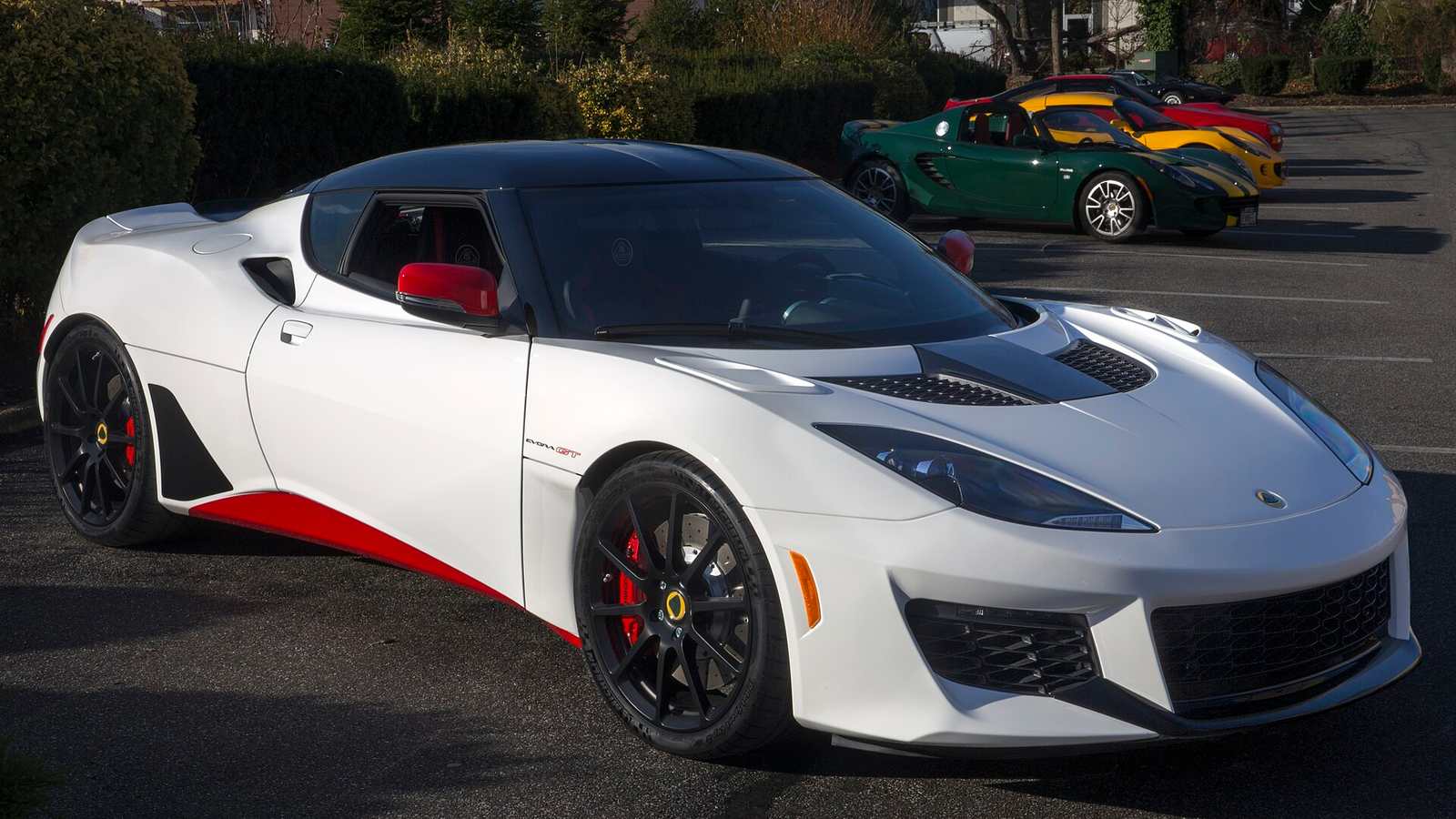

- Years
- 2009–2021
- Engine
- 3.5 Toyota 2GR-FE V6, later supercharged
- Power
- 276–430 bhp
- Weight
- about 1,250–1,400 kg
The Evora was the first all-new Lotus since the Elise: a larger bonded aluminium chassis, a mid-mounted 3.5-litre Toyota V6 and, unusually for a mid-engined car, the option of two small rear seats. The ride and steering were widely judged the best of any sports car of the time.
The supercharged Evora S arrived in 2010 with 345 bhp. The Evora 400 of 2015 was a thorough revision with narrower sills for easier entry, followed by the Sport 410, GT410 and the limited GT430. In North America the final version was sold simply as the Evora GT.
Lotus built 6,117 Evoras. Together with the Elise and Exige, that makes 51,738 cars from the three aluminium-chassis lines before production ended in 2021.
Variants
| Variant | Years | Notes |
|---|---|---|
| Evora | 2009–2015 | 276 bhp naturally aspirated. |
| Evora S | 2010–2015 | 345 bhp supercharged. |
| Evora 400 / Sport 410 | 2015–2019 | 400–410 bhp, revised chassis and cabin. |
| GT410 / GT410 Sport / Evora GT | 2018–2021 | The final road-biased versions. |
| GT430 | 2017–2018 | 430 bhp, limited production, extensive carbon. |
On a road trip
This is the Lotus for a two-week tour. It has a usable boot, a comfortable ride, air conditioning that works and enough torque for mountain passes at any altitude, while keeping the steering feel the brand is known for. It was sold in the United States throughout its life.
What to check
- Clutch life on early cars, and the cost of replacing it.
- Gear cable adjustment on pre-400 models.
- Air conditioning and infotainment faults.