Type 111 · two-seat roadster
Lotus Elise Series 3
2011–2021

- Years
- 2011–2021
- Engine
- 1.6 Toyota 1ZR-FAE, 1.8 supercharged 2ZR-FE
- Power
- 134–250 bhp
- Weight
- about 860–930 kg
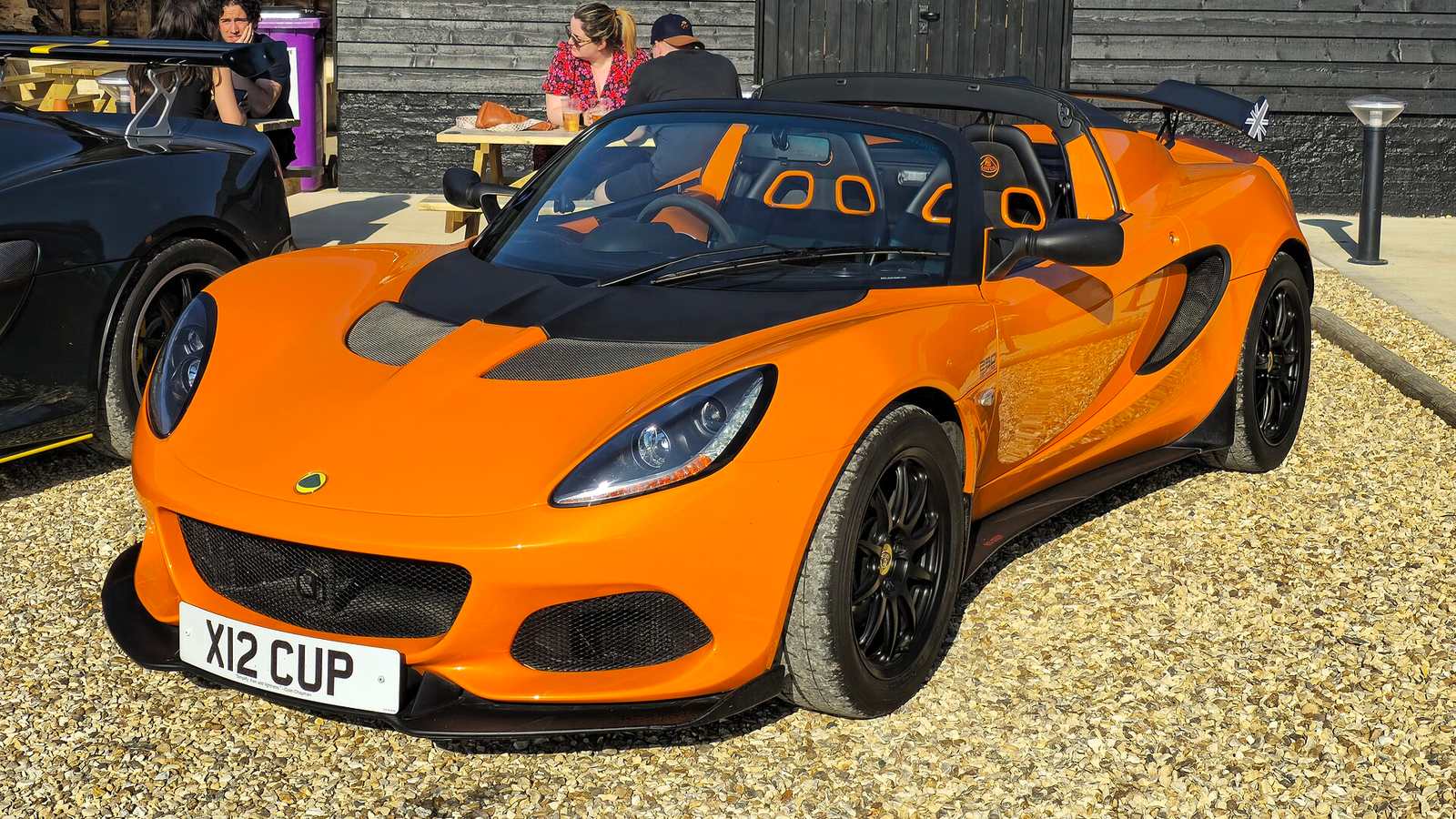
The facelifted Elise of 2011, commonly called the S3, brought a single-piece headlamp design and new Toyota engines to meet Euro 5 emissions rules: a 1.6-litre 1ZR with 134 bhp and, from 2012, a supercharged 1.8-litre 2ZR in the Elise S with 217 bhp.
From 2015 Lotus under Jean-Marc Gales pursued weight reduction hard. The Sport, Sprint and Cup models that followed trimmed mass with lighter seats, forged wheels, a lithium-ion battery and an exposed gear linkage. The Sprint 220 got the supercharged car down to under 880 kg.
Production ended in December 2021 with the Sport 240 and Cup 250 Final Editions. In all, Lotus built 35,124 Elises over 25 years.
Variants
| Variant | Years | Notes |
|---|---|---|
| Elise 1.6 | 2011–2018 | 134 bhp; light, frugal and underrated. |
| Elise S / Sport 220 | 2012–2021 | Supercharged 1.8, 217 bhp. |
| Sprint / Sprint 220 | 2017–2018 | Lightweight specification with carbon and forged parts. |
| Cup 250 / Cup 260 | 2016–2021 | 243–250 bhp, aero package, track-biased. |
| Sport 240 Final Edition | 2021 | 240 bhp run-out model. |
On a road trip
The supercharged cars have the mid-range torque that the older engines lack, which makes them easier and quicker at altitude, where naturally aspirated engines fade. Build quality is the best of the three series. Not sold new in the United States, where the Elise was withdrawn after the 2011 model year.
What to check
- Check the service history for the supercharger and charge cooler system.
- Air conditioning function, a common weak point.
- Cup models may have had hard track use; inspect brakes, dampers and the underside.