Type 111 · two-seat roadster
Lotus Elise Series 1
1996–2001
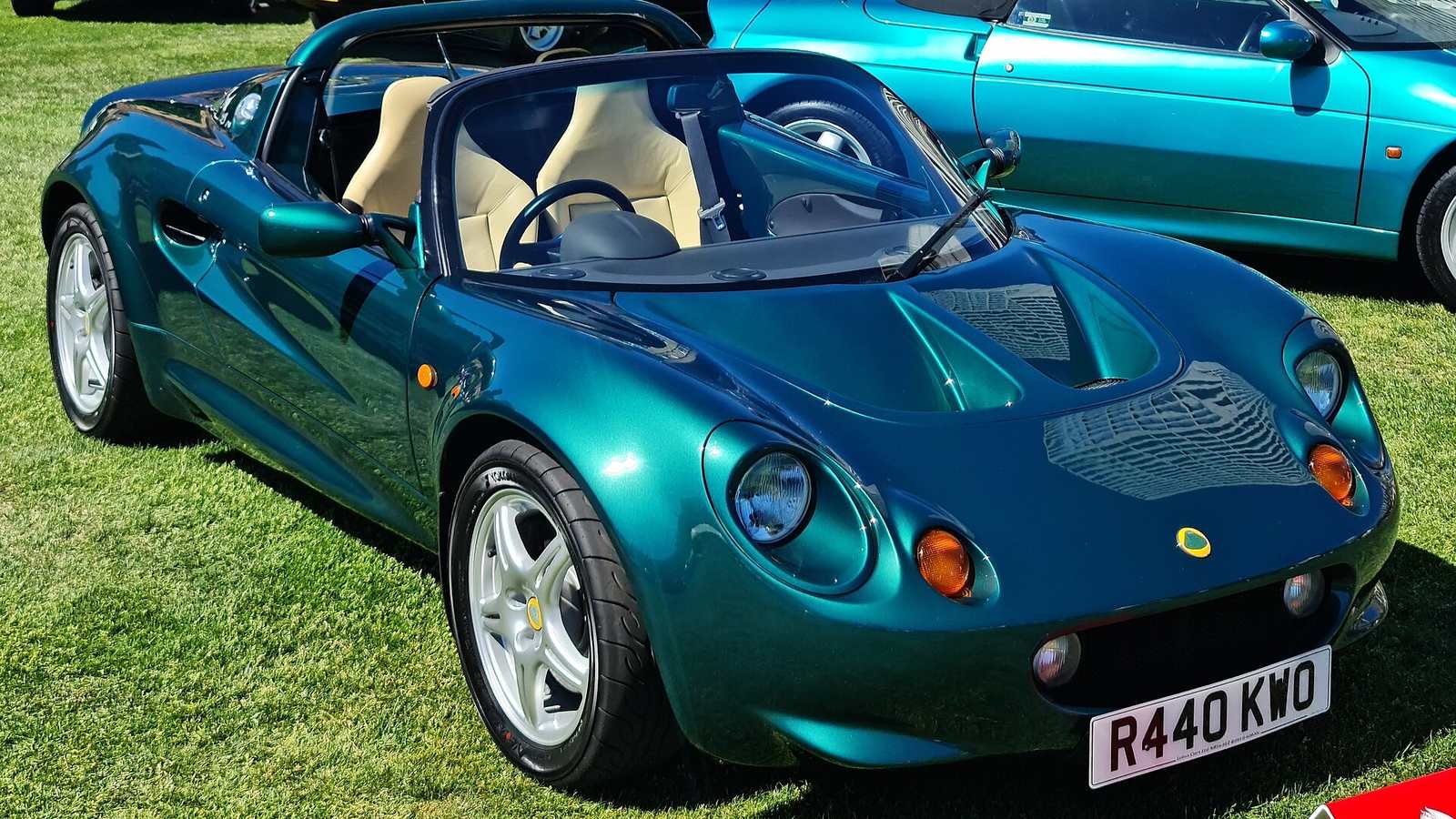

- Years
- 1996–2001
- Engine
- 1.8 Rover K-series inline-four
- Power
- 118–190 bhp
- Weight
- from 725 kg
The Elise was shown at the Frankfurt motor show in September 1995 and reached customers in 1996. Its chassis, designed by Richard Rackham, was a tub of aluminium extrusions bonded together with epoxy adhesive, weighing about 68 kg. With a glass-fibre body and a 118 bhp Rover K-series engine mounted behind the seats, the complete car weighed around 725 kg.
It was named after Elisa, the granddaughter of Romano Artioli, who owned Lotus at the time. Lotus expected to sell a few hundred a year. It sold thousands, and the car saved the company.
The S1 is the lightest and purest of the line. There is no power steering, no brake servo and no ABS. Early cars had metal matrix composite brake discs, later replaced by conventional iron ones. The steering feel is the benchmark that every later sports car has been measured against.
Variants
| Variant | Years | Notes |
|---|---|---|
| Elise 1.8 | 1996–2000 | 118 bhp, the standard car. |
| 111S | 1999–2000 | 143 bhp VVC engine, closer-ratio gearbox, wider rear tyres. |
| Sport 135 / Sport 160 / Sport 190 | 1998–2000 | Factory-tuned cars, the 190 essentially a track car. |
| Type 49, Type 79, 50th Anniversary | 1998–2001 | Heritage-liveried special editions. |
On a road trip
The most involving car here on a mountain pass and the least comfortable on the motorway to it. The hood is fiddly, the cabin is loud and there is no real luggage space beyond a small boot behind the engine that gets warm. For a hairpin road, nothing else on this page is as rewarding at sensible speeds.
What to check
- Head gasket failure on the K-series; check for a documented upgrade and a healthy cooling system.
- Radiator and coolant pipe condition, especially the long runs to the front.
- Crash damage to the bonded tub and suspension pick-up points, which is difficult and expensive to repair properly.
- Corrosion on the steel rear subframe and suspension wishbones.