Lotus Colours: A Guide to Factory Paint
The standard, metallic and premium paints offered over 25 years, the famous heritage liveries, and how to identify a car's colour.
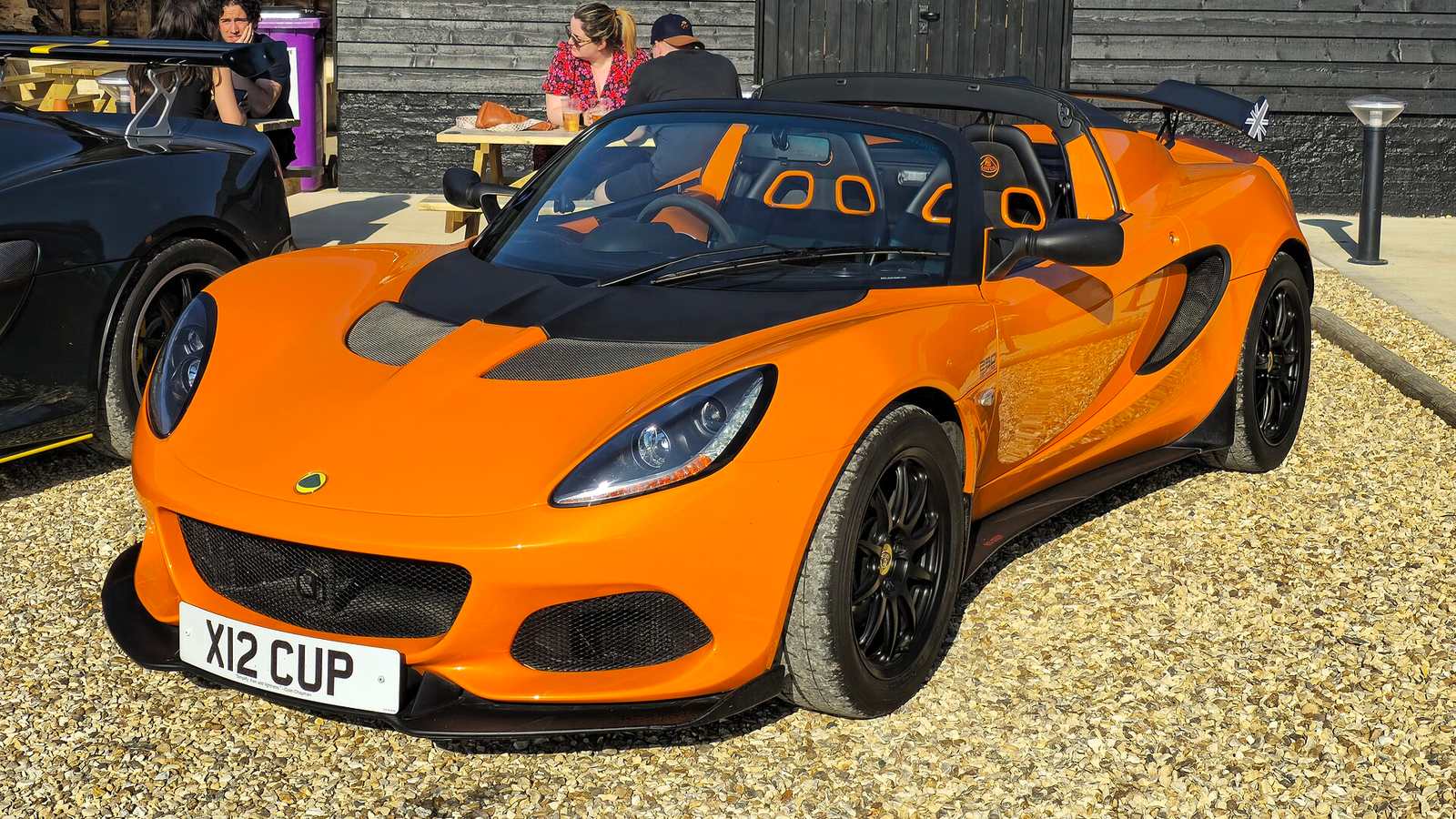

Lotus has always offered strong colours, and Elise owners have always chosen them. This is a guide to the paints most often seen. It is not a complete factory list: availability changed by model year and by market, special editions had their own colours, and Lotus would paint a car in almost anything for a price.
How Lotus organised its paint
For most of the Elise’s life the range was split into tiers: a small number of solid colours at no cost, a larger group of metallics, and a premium or “lifestyle” tier of pearlescent and special-effect paints. From 2012 the Lotus Exclusive programme added a much wider choice, including historic colours and paint to sample.
Series 1 era (1996 to 2001)
| Colour | Type |
|---|---|
| Norfolk Mustard Yellow | Solid. The colour most people picture on an early car. |
| Calypso Red | Solid |
| British Racing Green | Solid |
| Azure Blue | Metallic. Used on many launch and press cars. |
| New Aluminium | Metallic silver |
| Racing Green Metallic | Metallic |
| Titanium | Metallic grey |
| Black | Solid |
The 340R was built only in silver with black.
Series 2 era (2001 to 2011)
| Colour | Type |
|---|---|
| Ardent Red | Solid |
| Saffron Yellow | Solid |
| Solar Yellow | Metallic |
| Chrome Orange | Metallic. Strongly associated with the Exige. |
| Krypton Green | Premium. Probably the most recognisable S2 colour. |
| Laser Blue | Premium |
| Magnetic Blue | Metallic |
| Nightfall Blue | Metallic |
| Storm Titanium | Metallic |
| Arctic Silver | Metallic |
| Starlight Black | Metallic |
| Graphite Grey | Premium |
| Persian Blue | Premium |
| Aubergine Purple | Premium |
| Burnt Orange | Premium |
| Isotope Green | Premium |
| Canyon Red | Metallic |
| Polar Blue | Metallic |
| Aspen White | Solid |
| British Racing Green | Solid |
Series 3 and V6 era (2011 to 2021)
| Colour | Type |
|---|---|
| Solid Red, Solid Yellow | Solid |
| Metallic White, Metallic Silver, Metallic Grey, Metallic Black | Metallic |
| Metallic Orange | Metallic. Common on Cup models. |
| Metallic Blue, Essex Blue, Daytona Blue | Metallic and signature blues |
| Racing Green, Motorsport Green | Metallic greens |
| Vivid Green | Signature |
| Toxic Green | Signature |
| Nightfall Blue | Metallic |
| Burnt Orange, Fire Red | Signature |
| Motorsport Black | Solid, on Cup and track models |
The Final Edition cars of 2021 revived early colours, including Azure Blue and Racing Green, in a deliberate nod to the 1996 launch cars.
Emira (2022 onwards)
The Emira launched with a smaller palette, including Seneca Blue, Hethel Yellow, Magma Red, Nimbus Grey, Shadow Grey and Dark Verdant, and the range has grown since with further colours through Lotus’s personalisation programme.
Heritage liveries
Lotus has repeatedly dressed the Elise and Exige in the colours of its racing past:
- Green and yellow. The works Team Lotus colours of the 1960s: British Racing Green with a yellow stripe, as on Jim Clark’s cars. Seen on the Type 25 and Type 49 editions and countless owner-applied stripes.
- Gold Leaf. Red, white and gold, from the 1968 to 1971 Formula 1 cars. Used on the Type 49 and Type 72 editions.
- Black and gold. The John Player Special livery of the 1970s and 1980s. Used on the Type 72 edition, the Type 79 edition and several later run-out models.
- Essex. Blue, red and silver from the 1980 to 1981 team.
Finding your car’s colour
The paint name and code are on the build specification, which a Lotus dealer can retrieve from the chassis number. Lotus also offers a Certificate of Provenance for a fee, which records the original colour, options and build date. That document is worth having if originality matters to the car’s value.
Does colour affect value?
Somewhat. Period-defining colours such as Norfolk Mustard on an S1, Krypton Green or Chrome Orange on an S2, and factory heritage editions tend to find buyers quickly. Unusual premium colours with documented provenance can command a premium. Resprays in a non-original colour usually count against a car, and a colour change is also a reason to look more carefully for accident repair.