Road spotlight ·
Road Spotlight: The Serra do Rio do Rastro in the Brazilian Spring
The SC-390 in southern Brazil climbs to 1,421 m through a wall of stacked hairpins. What late spring brings, and how to plan around the cloud and rain.
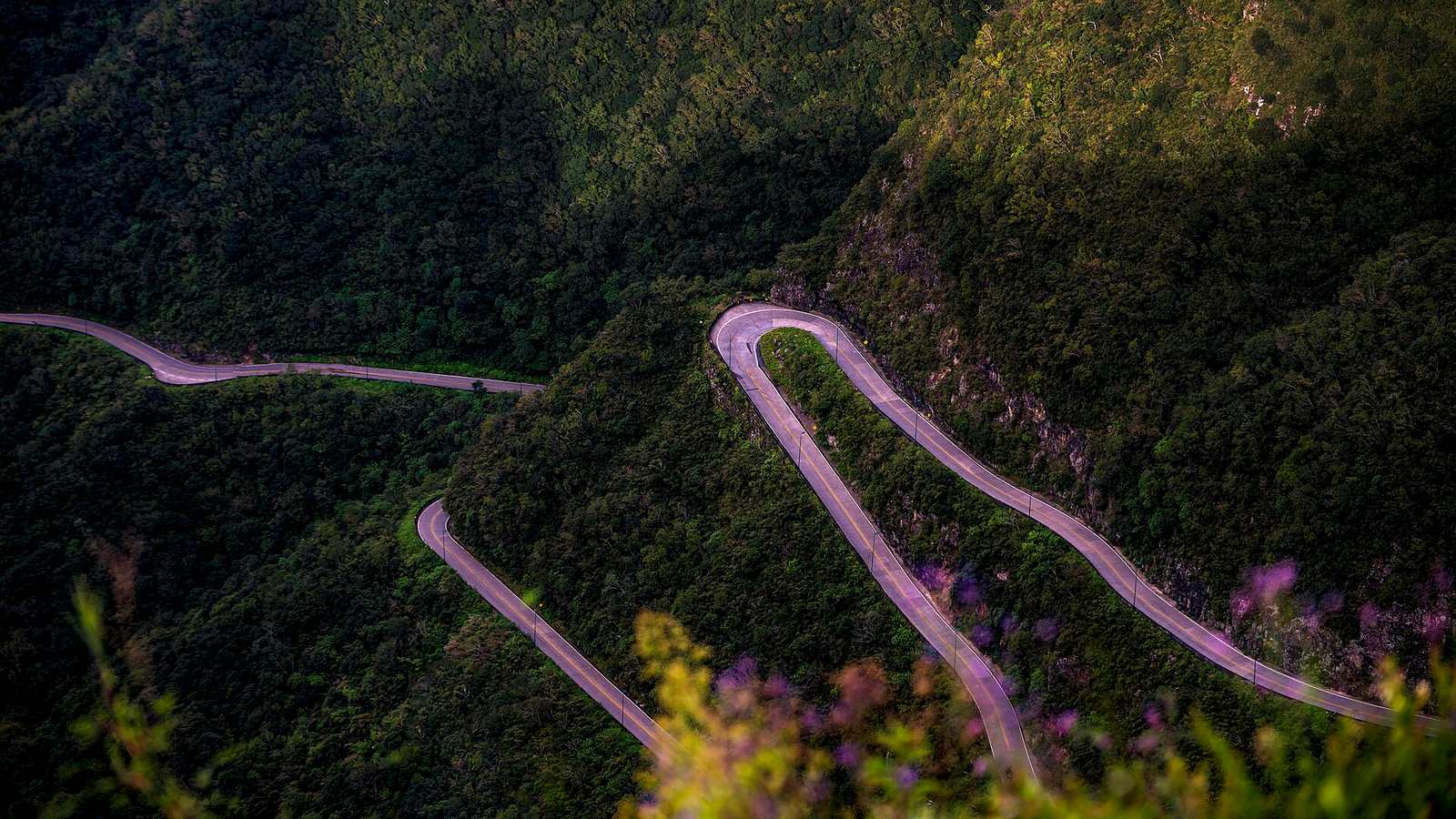

While the northern hemisphere’s passes close for winter, the south is coming into its long days. This week we go to South America and the most photographed road in Brazil: the Serra do Rio do Rastro, the SC-390 in the state of Santa Catarina.
The road
The SC-390 climbs the escarpment of the Serra Geral, from the coastal plain at Lauro Müller to the plateau at Bom Jardim da Serra, 1,421 m above sea level. The whole climb is about 25 km and takes around 45 minutes without stops.
The lower part is a fast, winding climb through forest. The last 8 km are the section people come for: very tight, very steep hairpins on a concrete surface, one stacked directly above the next on a rainforest-covered wall. The road is lit at night, and the lookout at the top sees all the way to the coast on a clear day.
What November brings
November is late spring in southern Brazil. The cold snaps that can bring frost and even snow to the plateau in winter have passed, and the days are long. The trade-off is the weather on the escarpment itself. The clearest months here are April to September; in spring and summer, cloud builds on the wall most afternoons, and heavy rain is more frequent.
That matters on this road in particular. The concrete hairpins are slippery when wet, and heavy rain has closed the SC-390 several times over the years, with water running down the carriageway and rockfalls from the cutting above. Check the state road police (PMRv) and local news for the current status before making the trip, and have a plan B.
Driving it in a Lotus
The practical advice is simple: start early. A morning climb gives the best chance of a dry surface and a view from the top before the cloud arrives.
The hairpins are so tight that lorries need several shunts to get round, and they use the whole width of the road to do it. If you meet one, stop well back and wait. Watch for coatis and other animals at the lookout and on the road, and for visitors stopping wherever there is a view.
A low car has no trouble with the SC-390 itself, but the neighbouring Serra do Corvo Branco, which would make a natural loop, is partly unsealed and not suited to a Lotus. Return the way you came, which gives you the hairpins in the other direction.
Before you go
Brazil’s Lotus community is small, and specialist help in the region is limited, so the basics of our road trip preparation guide apply more than usual: tyres, brake fluid and a plan for getting home if something fails. For more roads that suit a light car, see the full list of trails.